Septic in Cullman, without the guesswork
Straight answers on what plateau soil and limestone underneath do to a septic design, what the county health department will ask for, and the 300 ft sinkhole rule almost nobody mentions.
- 300 ftField to a sinkhole
- 100 ftField to any well
- 60 inObservation pit depth
- REDFReserve field required
- Sourced from published rules
- We do not sell septic work
- We refer only to licensed pros
- Never a charge from us
Thin soil, hard floor, and holes in the ground
Almost every argument about a septic system is really an argument about soil. Get that part right and the rest of it is paperwork.
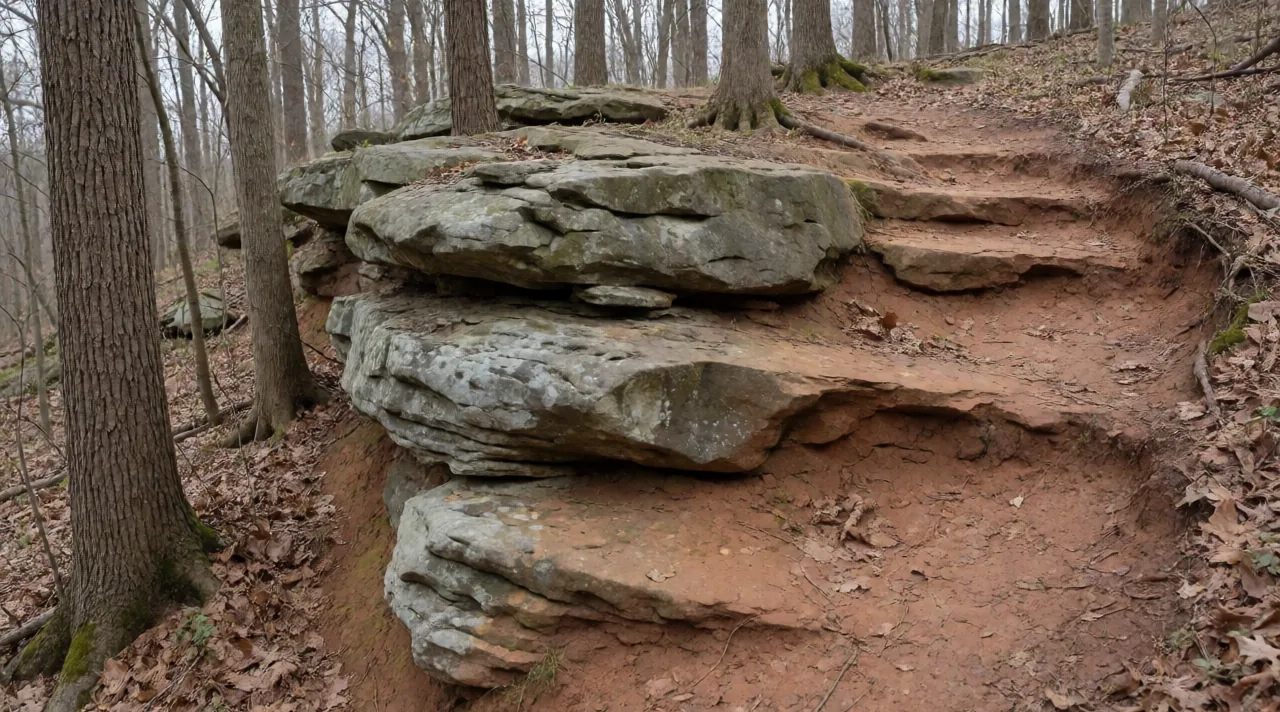
Cullman County sits on the southern end of the Cumberland Plateau. The usual profile is a sandy or silt loam over sandstone and shale residuum, and the recurring problem is simply that there is not very much of it before something stops the water. In parts of the county the rock underneath is limestone rather than sandstone, and limestone dissolves. That gives you karst: solution channels, springs and sinkholes, where water entering the ground can travel a long way fast without ever being filtered.
A conventional system is three jobs in a row, and only the first two are equipment. The tank separates, the distribution box shares the flow out, and then the soil itself does the treating. When people say a septic system failed, what they nearly always mean is that the third part stopped working, because the ground was never able to do the job it was being asked to do.
The test that decides everything
A licensed evaluator is not guessing and is not consulting a map. They put holes in your ground and watch what water does. Two lots on the same street can come back with completely different answers, which is exactly why nobody can quote you honestly over the phone.
What that leaves you with
On the plateau the design almost always comes down to usable depth. The rules set a minimum vertical separation between the bottom of the trench and a restrictive horizon, and on a thin-soiled lot that separation is the binding constraint long before perc rate is. Where the rock is limestone there is a second constraint on top: an effluent disposal field must sit 300 ft from a cave, sinkhole or similar depression, which on a karst lot can remove most of the usable ground in one stroke.
Not us, not a contractor on the phone, not a soil survey. The design follows the boring log. That is why the evaluation is the first thing you pay for, and why a quote given before one is worth precisely nothing. Get local pros to quote the evaluation →
What it costs
Ranges we would expect to see quoted on the plateau, not a price list and not a quote. Alabama fees are set locally and installed costs are not published by anyone, including us. Depth to rock is the single biggest driver of where a job lands inside these bars.
Where to start
What an Onsite System Really Costs in Cullman County
Realistic 2026 cost ranges for Cullman County, and why the soil evaluation rather than the house is what decides whether you are buying a trench.
The Soil Evaluation, and What ASHES Actually Means
Alabama evaluators are looking for ASHES: the zone that saturates for twenty days or more in most years, read off grey mottling at chroma 2 or less.
Septic Repair in Cullman, Hanceville, Good Hope
Soggy ground, sewage smell, slow drains or an alarm? How to read septic failure here, and what is usually wrong.
Areas we cover
Cullman
The county seat. Sewered in town, on-site across the surrounding acreage.
Hanceville
South county on the Mulberry Fork. Mostly private systems.
Good Hope
Just south of Cullman along the interstate, growing steadily.
Holly Pond
Rural east county. Thin soil over rock is the normal finding.
Baileyton
High ground in the northeast, large lots, all on-site.
Vinemont
North of Cullman on the ridge. Depth to rock varies sharply.
Common questions
Do I need a permit to install or replace a system?
Yes, and it is not a formality. the Cullman County Health Department is the local health department that issues the permit and makes the site determinations, applying the rules the Alabama Department of Public Health writes for the whole state. Work that goes in without one is work that has to come back out, and it will show up again the day you try to sell.
How much does a new system cost here?
For most local lots the honest answer is a range, not a number. The bars on our cost page show what each system type typically runs installed. Where your job lands inside them is decided by the soil boring, not by the house.
How long does the whole process take?
Weeks, not days. The evaluation, the design, the review and the inspection each wait on somebody else's calendar. Homeowners who start early are the ones who avoid delaying a build or a closing.
Can you tell me what my lot needs?
No, and neither can anyone else who has not dug a hole on it. Soil maps are a starting point and nothing more. The design follows the boring log, which is why the evaluation is the first thing you pay for rather than the last.
Request a septic quote
We read every request and pass it to a licensed local professional covering Cullman County where one is available. We are still building our list of professionals here, so we cannot promise one is available or say how quickly they will respond.